Complete How To Guide to a Successful HVAC Install

Corey Creekmore • September 9, 2026

Man playing guitar-shaped thermometer, sweating, with musical notes.

Share this article


Introduction: Why Your Heating and Cooling System Matters

When it comes to maintaining a healthy, comfortable, and energy-efficient living environment, few household investments are as critical as your heating, ventilation, and air conditioning system. Every homeowner relies on a seamless combination of heating and cooling technology to stay comfortable through scorching summer afternoons and frigid winter nights. However, even the most expensive, top-tier heating and cooling equipment will fail to deliver if it is improperly fitted, accurately configured, or poorly integrated into your dwelling.


Planning a complete HVAC Install is a significant undertaking, but understanding the underlying process empowers you to make smart, cost-effective decisions. Whether you are replacing an outdated heat pump, upgrading a failing central air conditioner, or equipping a newly built home, making informed choices about your system sizing, equipment ratings, ductwork integrity, and contractor selection will ensure long-term comfort and minimal utility bills.


In this comprehensive guide, we will walk you through everything you need to know about preparing for, executing, and maintaining a new system. From calculating thermal loads to understanding energy efficiency metrics, this resource will serve as your complete roadmap to a successful equipment installation.


1. Recognizing the Signs You Need a New System

Homeowners often wonder whether they should continue paying for minor air conditioning repairs or invest in a brand-new installation. While routine maintenance can stretch the lifespan of an older setup, there comes a point where keeping legacy machinery on life support becomes financially impractical.


Frequent and Costly Repairs

If you find yourself calling a technician multiple times a season to replace blown capacitors, failing fan motors, or leaking coils, those incremental costs quickly add up. A good rule of thumb is the 50 percent rule: if the cost of a single repair approaches or exceeds half the price of a replacement system, upgrading is almost always the smarter financial choice.


Skyrocketing Utility Bills

As mechanical components age, friction increases, electrical coils wear out, and compressors lose operational efficiency. If your energy bills are steadily rising despite identical usage patterns, your system is working far harder than necessary to produce basic heating or cooling. Modern equipment operates with drastically superior efficiency, offering immediate savings on monthly electric bills.


Inconsistent Temperatures and Poor Air Quality

Are certain bedrooms in your house consistently hot and humid while the living room feels freezing? Is your indoor air noticeably dusty, stale, or dry? Uneven climate control and lingering humidity are clear indicators that your existing equipment has lost its cooling capacity or that your ductwork is no longer operating effectively.


The 10-to-15-Year Lifespan Rule

Most modern air conditioners and heat pumps have a functional lifespan of roughly 10 to 15 years, while well-maintained gas furnaces can last around 15 to 20 years. Once your equipment crosses the decade mark, crucial parts become obsolete, phased-out refrigerants become extremely expensive to replenish, and sudden total failure becomes far more likely.


2. Choosing the Right Type of Heating and Cooling Equipment

Every home has unique layout constraints, regional weather demands, and architectural quirks. Selecting the correct system configuration is the foundation of long-term indoor comfort.

  • Split-System Air Conditioners: The standard choice for many suburban homes. These systems features an outdoor condenser unit coupled with an indoor evaporator coil and air handler or furnace. They are ideal for structures that already possess built-in duct networks.
  • Heat Pumps: Operating as an all-in-one heating and cooling solution, modern heat pumps extract thermal energy from outside air to warm your home during winter and reverse the process to cool it during summer. Advanced inverter-driven heat pumps remain exceptionally efficient even in below-freezing conditions.
  • Ductless Mini-Splits: Perfect for room additions, converted garages, or older historical homes lacking ductwork. Ductless systems connect an outdoor compressor directly to individual indoor air handlers mounted on interior walls, offering precise multi-zone temperature control.
  • Packaged Systems: Common in homes built on concrete slabs or flat roofs, packaged units house the compressor, condenser, and evaporator components inside a single outdoor cabinet, routing air directly through ductwork entering the building envelope.


3. The Science of Sizing: Understanding Manual J Calculations

One of the most common mistakes made during an installation project is buying equipment based purely on square footage or simply matching the tonnage of the old unit. Oversized or undersized equipment creates severe performance issues.

If a system is undersized, it will run continuously without ever reaching the desired thermostat setpoint during extreme weather. This continuous load causes unnecessary mechanical wear and drives up power consumption.


Conversely, an oversized system cools a room far too quickly. While that might sound beneficial, rapid cooling causes the equipment to short-cycle—turning on and off rapidly. Short-cycling prevents the system from removing moisture from the air, leaving your home feeling uncomfortably damp and clammy while spiking your energy usage.


Professional technicians perform a comprehensive industry-standard calculation known as a Manual J Load Calculation. This calculation considers critical property variables:

  • Total square footage and ceiling height
  • Insulation ratings in walls, attics, and crawlspaces
  • Number, orientation, and glass ratings of all windows
  • Regional climate profiles and solar exposure
  • Occupancy numbers and heat-generating appliances


4. Key Energy Ratings to Evaluate

When shopping for new equipment, you will encounter several acronyms designed to rate energy performance. Understanding these ratings helps you calculate your long-term return on investment.


SEER2 (Seasonal Energy Efficiency Ratio 2)

SEER2 measures the total cooling output of an air conditioner during its normal annual usage divided by the total electric energy input over the same period, tested under updated, real-world static pressure conditions. Higher numbers indicate greater efficiency. While the federal minimum usually ranges between 13.4 and 15 SEER2 depending on your region, high-efficiency models can reach ratings well above 20 SEER2.


AFUE (Annual Fuel Utilization Efficiency)

AFUE measures how efficiently a gas or oil furnace converts fuel into usable heat energy over a standard heating season. A rating of 80% means 80% of the fuel goes directly into warming your home, while 20% escapes through exhaust venting. High-efficiency condensing furnaces achieve AFUE ratings of 95% to 98%.


HSPF2 (Heating Seasonal Performance Factor 2)

HSPF2 rates the heating efficiency of electric heat pumps over a typical heating season. Just like SEER2, a higher HSPF2 rating means reduced electricity usage during colder months.


5. Step-by-Step Overview of the Process

Understanding what to expect on installation day ensures a smooth experience and helps you prepare your living space.

  1. Site Assessment and Work Area Preparation: Technicians clear the workspace around indoor and outdoor equipment zones, place protective floor drop cloths, and safely shut off main circuit breakers, gas lines, and local electrical disconnects.
  2. Refrigerant Recovery and Old System Removal: Federal environmental regulations require certified technicians to safely pump out and recover existing chemical refrigerant using specialized containment recovery pumps. Once recovered, the old outdoor condenser, indoor air handler, and evaporator coils are disconnected and removed for recycling.
  3. Duct Inspection and Modification: Before bringing in new machinery, technicians inspect existing ductwork for air leaks, crushed segments, or improper sizing. Modifications are completed to ensure proper air volume distribution.
  4. Setting New Indoor and Outdoor Units: The new indoor air handler or furnace is positioned, leveled, and vibration-damped. Outside, a new composite pad is laid down to keep the outdoor condensing unit level and elevated above water, snow, and debris.
  5. Refrigerant Line Installation and Brazing: Fresh copper refrigeration lines are run between the indoor and outdoor sections, insulated, and silver-brazed to create leak-free connections under high pressure.
  6. Electrical and Control Wiring: High-voltage power lines, safety float switches, and low-voltage control cables are wired into modern smart thermostats or system control boards.
  7. System Evacuation and Dehydration: Technicians attach a vacuum pump to remove air, non-condensable gases, and moisture from the sealed copper lines, bringing the system down to deep sub-micron levels before releasing the primary refrigerant charge.
  8. Startup, Commissioning, and Testing: The system is powered up to measure airflow rates, electrical current draws, fan speeds, static pressure drops, and temperature differentials across coils to guarantee peak performance.


6. How Proper Maintenance Protects Your Investment

Completing a professional upgrade is only the first step in maximizing equipment performance. To protect your investment and preserve warranty coverage, establish a routine home maintenance discipline.


Replace air filters every 30 to 90 days depending on pet ownership, dust exposure, and filter thickness. Clogged air filters choke system airflow, causing coils to freeze over and motor windings to overheat. Furthermore, keep the outdoor condensing unit free of lawn clippings, leaf buildup, and shrubbery—leaving at least two feet of clear space around the perimeter ensures adequate air circulation.


Partnering with licensed professionals for annual tune-ups guarantees that minor electrical looseness, drain line clogs, and refrigerant imbalances are caught early. When you are ready to upgrade your indoor comfort with a seamless HVAC Install, choosing experienced specialists who prioritize precision workmanship ensures maximum efficiency and total peace of mind for decades to come.


Conclusion: Enjoying Long-Term Comfort and Savings

Investing in a high-efficiency heating and cooling system transforms the overall quality of your living space. By choosing correctly sized equipment, insisting on comprehensive ductwork evaluations, and prioritizing expert craftsmanship during installation, you create a healthier, quieter, and far more energy-efficient household. Take time to assess your current comfort demands, evaluate available rebate opportunities, and work with trusted technicians who take pride in executing every step of the installation process meticulously.


Recent Posts

HVAC repair technician testing electrical connections on an outdoor air conditioner condenser unit
By Corey Creekmore September 4, 2026
Learn essential HVAC repair tips, basic maintenance, and troubleshooting steps to keep your heating and cooling system running efficiently year-round.
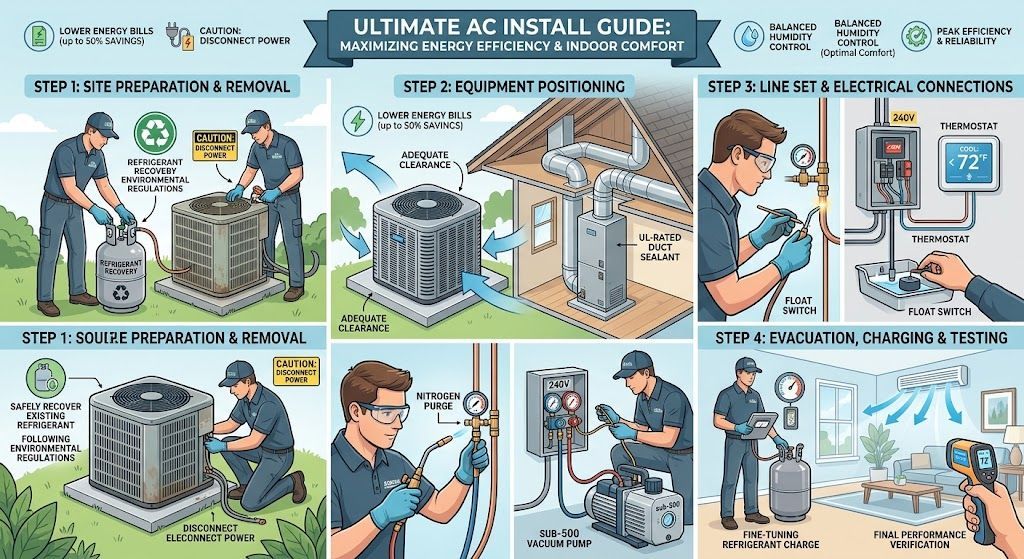
Professional HVAC technician performing a central AC installation to maximize energy efficiency.
By Corey Creekmore August 26, 2026
Learn how to maximize home comfort and lower energy bills with our complete AC installation guide. Discover sizing tips, SEER2 ratings, and expert advice!
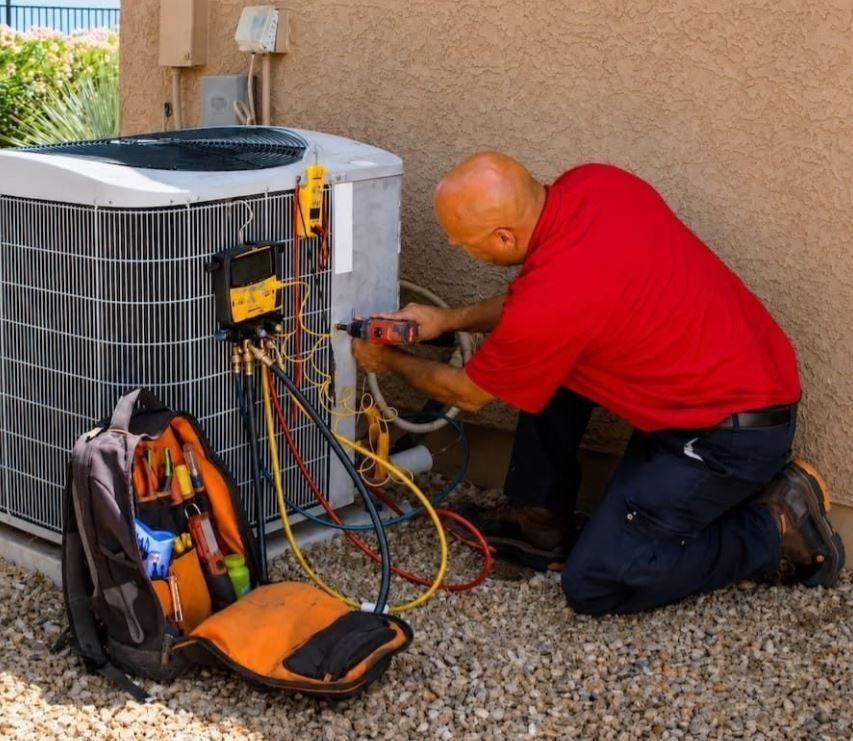
Certified HVAC technician performing Lehigh Acres AC repair and system diagnostics
By Corey Creekmore August 19, 2026
Need reliable Lehigh Acres AC repair? Learn common cooling issues, emergency warning signs, and expert tips to keep your air conditioner running efficiently.
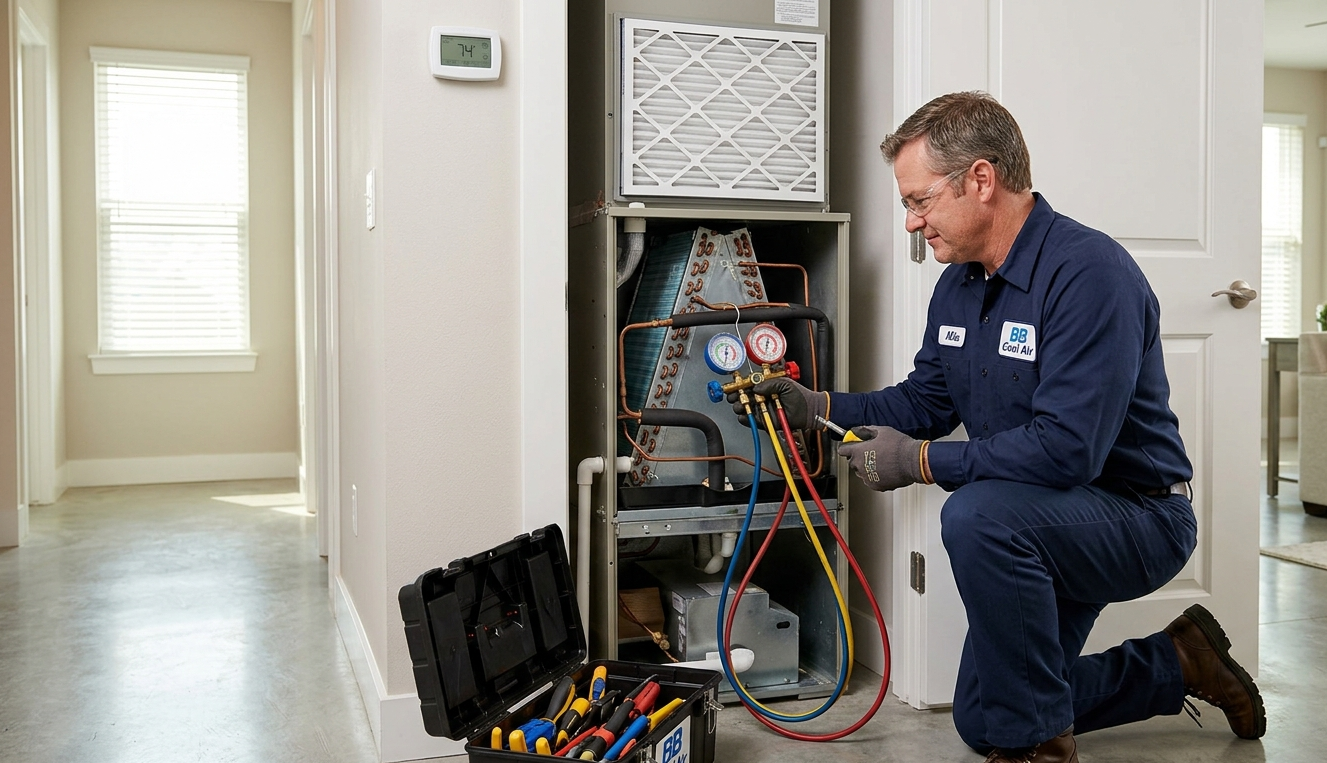
By Corey Creekmore August 13, 2026
When temperatures spike, a well-functioning air conditioner transitions from a simple household luxury to an absolute necessity. Mid-summer cooling system failures can quickly convert a comfortable living space into an unbearable heat sink, putting stress on your family’s health and indoor air quality. Understanding how your cooling system operates, identifying early signs of component failure, and knowing when to call a professional technician are essential steps for every homeowner. This comprehensive guide covers everything you need to know about air conditioner performance, common failure points, professional diagnostic processes, and preventative routine maintenance. 1. Unmistakable Signs Your Home Needs Immediate AC Repair Air conditioners rarely breakdown without warning. Modern cooling systems usually display minor performance issues before a complete mechanical shutdown occurs. Recognizing these warning signs early can save you thousands of dollars in major component replacements. Warm Air Flowing From Vents If your system is running continuously but blowing lukewarm or ambient air, several underlying issues could be responsible: Refrigerant Leaks: Low refrigerant levels prevent the evaporator coil from absorbing heat effectively from your indoor air. Dirty Evaporator Coils: Dirt build-up acts as an insulator, blocking thermal transfer between the air and the cooling coil. Compressor Strain: A failing or burned-out compressor cannot pressurize the refrigerant required to start the cooling process. Weak or Restrictive Airflow Insufficient airflow throughout your home indicates that air is not circulating efficiently through your ductwork system. This issue is frequently caused by a clogged high-efficiency particulate air (HEPA) filter, a failing blower motor, or physical obstructions within the supply ducts. Strange Noises and Unpleasant Odors A healthy air conditioning system operates with a subtle, predictable hum. Sudden, jarring sounds usually signal mechanical distress: Grinding or Squealing: Indicates worn-out motor bearings or a slipping fan belt that requires immediate replacement. Clanging or Rattling: Often points to a loose component inside the compressor assembly or a damaged fan blade. Musty or Burning Smells: A damp, moldy smell suggests fungal growth in the drain pan or coils, while a burning metallic odor usually signals electrical overheating or a short circuit. 2. Common Causes of Air Conditioning Failures Understanding why air conditioning systems break down helps homeowners implement better operational habits and prevent unexpected service calls. +-------------------------------------------------------------------+ | COMMON AC FAILURE COMPONENT CAUSES | +-------------------------------------------------------------------+ | 1. Refrigerant Leaks -> Chemical corrosion in copper lines | | 2. Electrical Failure -> Capacitor burnouts, contactor pitting | | 3. Frozen Evaporator -> Restricted airflow, low refrigerant | | 4. Clogged Condensate -> Water backing up, safety trip switch | +-------------------------------------------------------------------+ Refrigerant Leaks Refrigerant is the vital fluid that carries heat out of your home. Over time, formicary corrosion can form microscopic holes in copper tubing, letting refrigerant escape into the environment. Because cooling systems are closed loops, low refrigerant always points to a leak rather than normal chemical consumption. Electrical Component Wear An air conditioner's electrical system endures significant stress, especially during the high-demand summer months. Frequent thermal cycling wears down start capacitors, run capacitors, and contactor switches. When a capacitor fails, the compressor and outdoor fan motor cannot draw the electrical power required to start up. Clogged Condensate Drain Lines As warm air passes over the icy cold evaporator coil, moisture condenses out of the air and collects in a drain pan. This water flows away through a plastic condensate line. Over time, algae, mold, and dust can build up inside the pipe, creating a blockage. Without proper drainage, water backs up into your home, causing water damage or triggering safety switches that shut off the entire unit. 3. Step-by-Step Diagnostic Routine Before Calling a Technician Before scheduling a service visit, perform a quick initial assessment. Minor operating issues can sometimes be resolved with simple home maintenance checks. Check Thermostat Settings Ensure your thermostat is set to "Cool" and the target temperature is set at least 3 to 5 degrees below the current room temperature. If the display screen is completely blank, replace the internal AA batteries or check your home's main electrical panel for a tripped circuit breaker. Inspect and Replace the Air Filter A heavily clogged air filter restricts airflow across the evaporator coil, dropping internal temperatures until ice forms over the copper lines. Replace dirty disposable air filters immediately and wait for any ice on the lines to melt completely before restarting the unit. Inspect the Outdoor Condenser Unit Clear away fallen leaves, weeds, lawn debris, and outdoor furniture from around the exterior unit. The outdoor condenser coil requires at least two feet of clear space on all sides to exhaust heat effectively into the surrounding air. 4. Professional AC Repair vs. System Replacement Deciding whether to repair an aging cooling unit or invest in a modern replacement is one of the biggest financial decisions a homeowner faces. HVAC technicians use several industry standards to guide this decision. The $5,000 Rule Multiply the age of your air conditioner (in years) by the total estimated repair cost in dollars. If the total calculation exceeds $5,000, replacing the system is usually the most cost-effective long-term choice. Example A: A 4-year-old system needing a $400 repair equals 1,600. Recommendation: Proceed with the repair. Example B: A 12-year-old system needing an $800 repair equals 9,600. Recommendation: Upgrade to a new system. Energy Efficiency Considerations Older cooling systems operate on lower Seasonal Energy Efficiency Ratio (SEER) ratings, often between 10 and 13 SEER. Modern high-efficiency systems feature SEER2 ratings ranging from 16 to over 22. Upgrading to a modern unit can reduce summer cooling bills by up to 30% to 50%, helping offset the initial cost of replacement over time. 5. Preventative Maintenance and Longevity Strategies The best way to avoid unexpected summer breakdowns is through consistent, proactive preventive maintenance. Scheduling annual tune-ups keeps your equipment running smoothly and extends its working lifespan. Spring Preventative Maintenance Checklist Clean the Outdoor Coils: Gently hose off dust, pollen, and debris from the condenser fins using a garden hose (avoid high-pressure power washers, which can bend delicate aluminum fins). Clear the Drain Line: Flush a cup of warm water mixed with white vinegar down the condensate drain line to prevent algae buildup. Inspect Electrical Wiring: Check outdoor wiring harnesses for cracked insulation, loose connections, or rodent damage. Schedule Professional Servicing: Book a certified HVAC technician every spring to inspect refrigerant charge levels, test motor amperages, and recalibrate system sensors. Proper installation and expert maintenance ensure your system stays energy efficient during seasonal weather extremes. For comprehensive residential cooling evaluations, system diagnostics, and fast emergency service, visit BB Cool Air for reliable AC Repair solutions tailored to your home's specific requirements. References U.S. Department of Energy (DOE): Maintaining Your Air Conditioner. Detailed guidance on filter management, coil cleaning, and professional maintenance schedules for residential central cooling systems. Environmental Protection Agency (EPA): Section 608 Stationary Equipment Safety & Leak Repair Regulations. Federal guidelines governing refrigerant management, leak rate rules, and environmental protection protocols during repairs. American Society of Heating, Refrigerating and Air-Conditioning Engineers (ASHRAE): Standard 180-2018: Standard Practice for Inspection and Maintenance of Commercial and Residential Building HVAC Systems. Industry standards for systematic inspection and preventative servicing protocols. Air Conditioning Contractors of America (ACCA): Standard 4: Maintenance of Residential HVAC Systems. Technical requirements and operational checklists for professional field maintenance procedures. ENERGY STAR Program: Central Air Conditioner Buyer's Guide & Efficiency Ratings (SEER2). Energy performance recommendations, seasonal efficiency metrics, and cost-saving guidelines for residential cooling replacements.
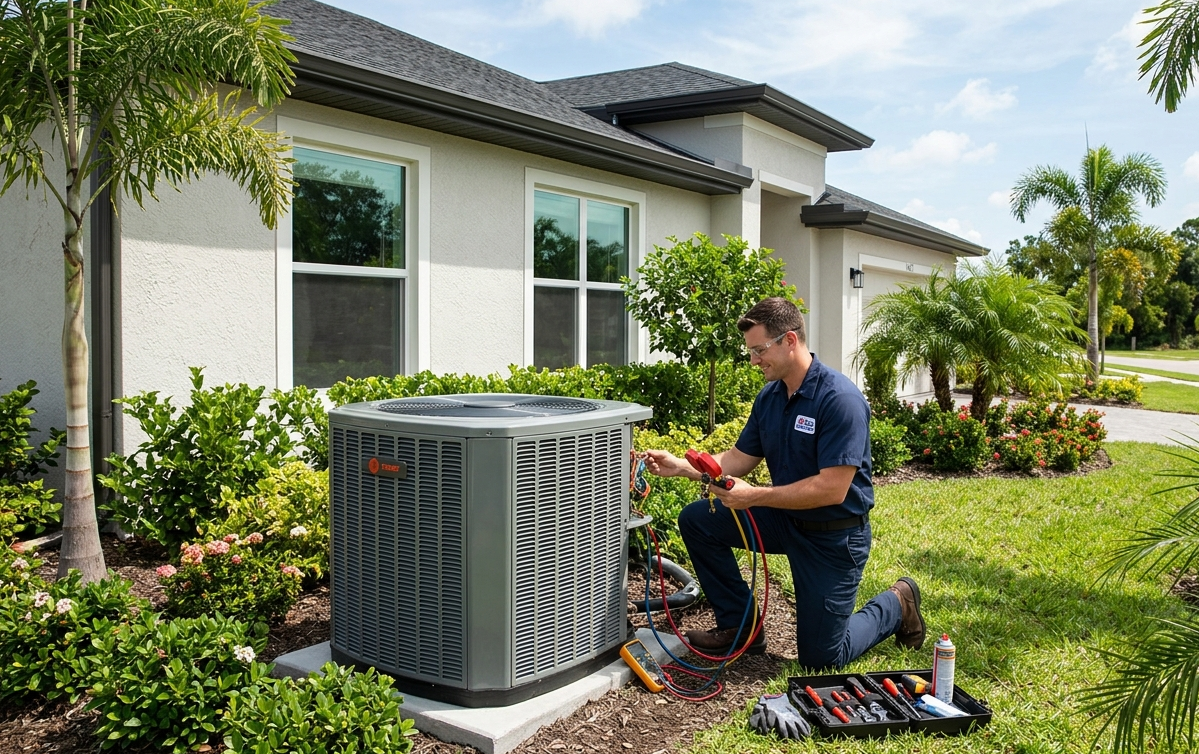
HVAC technician servicing an outdoor air conditioning unit for Lehigh Acres HVAC services
By Corey Creekmore August 6, 2026
Discover reliable Lehigh Acres HVAC services. Learn expert cooling, heating, and air quality solutions to keep your SW Florida home comfortable year-round.
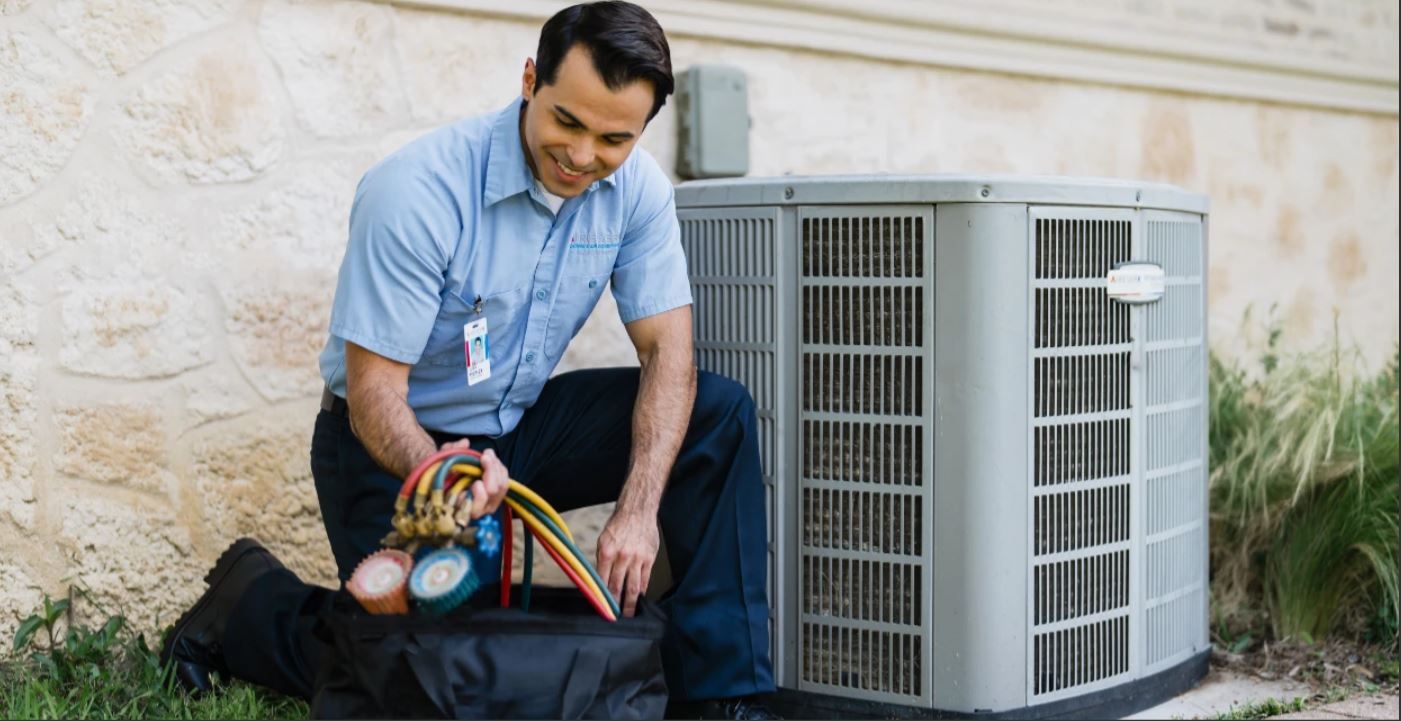
HVAC technician inspecting an outdoor air conditioning unit with pressure gauges
By Corey Creekmore July 29, 2026
Keep your home comfortable year-round with our guide on professional HVAC service, preventive maintenance tips, and energy-saving heating and cooling advice.
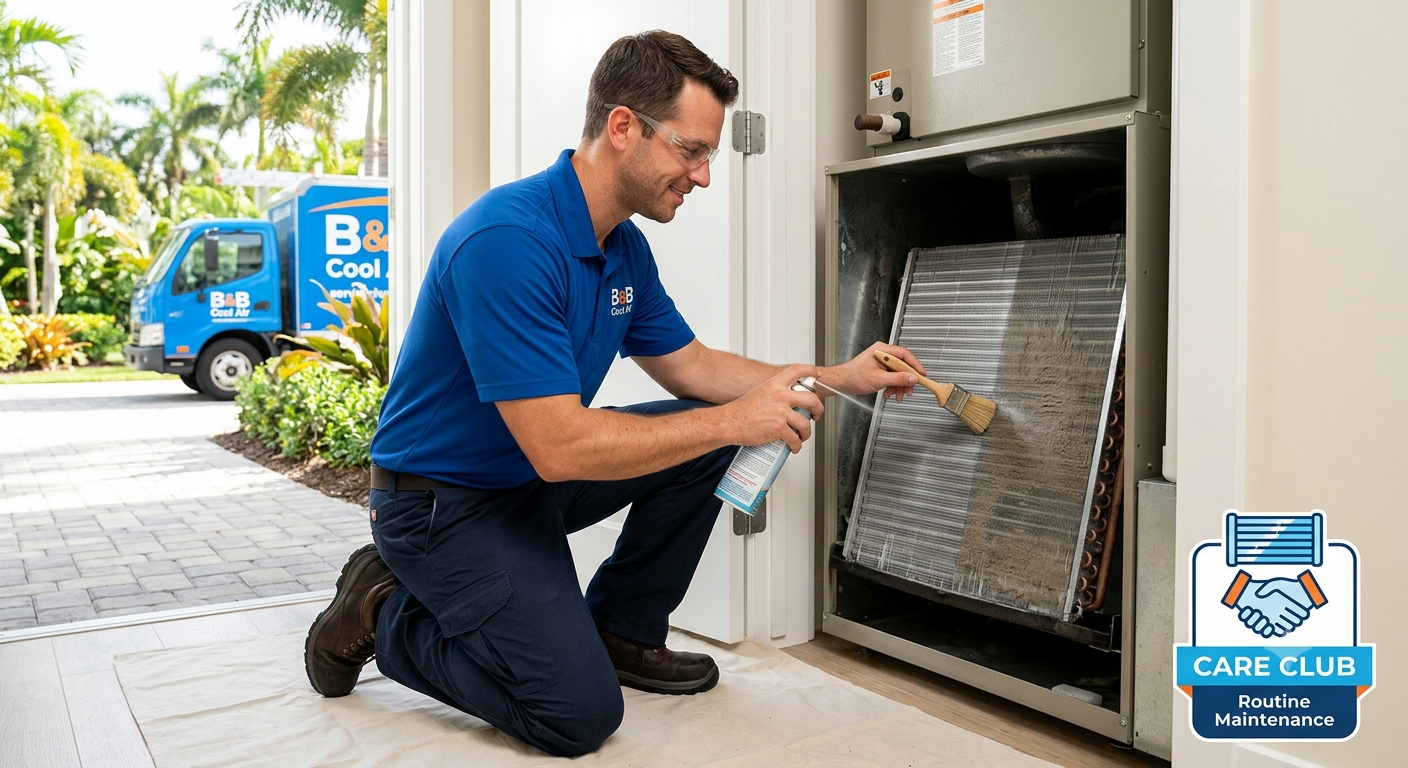
B&B Cool Air technician performing routine AC maintenance and coil cleaning on a Florida HVAC unit.
By Corey Creekmore July 23, 2026
Protect your home from costly breakdowns! Discover why routine AC maintenance in Southwest Florida saves energy, lowers bills, and keeps your system cool.
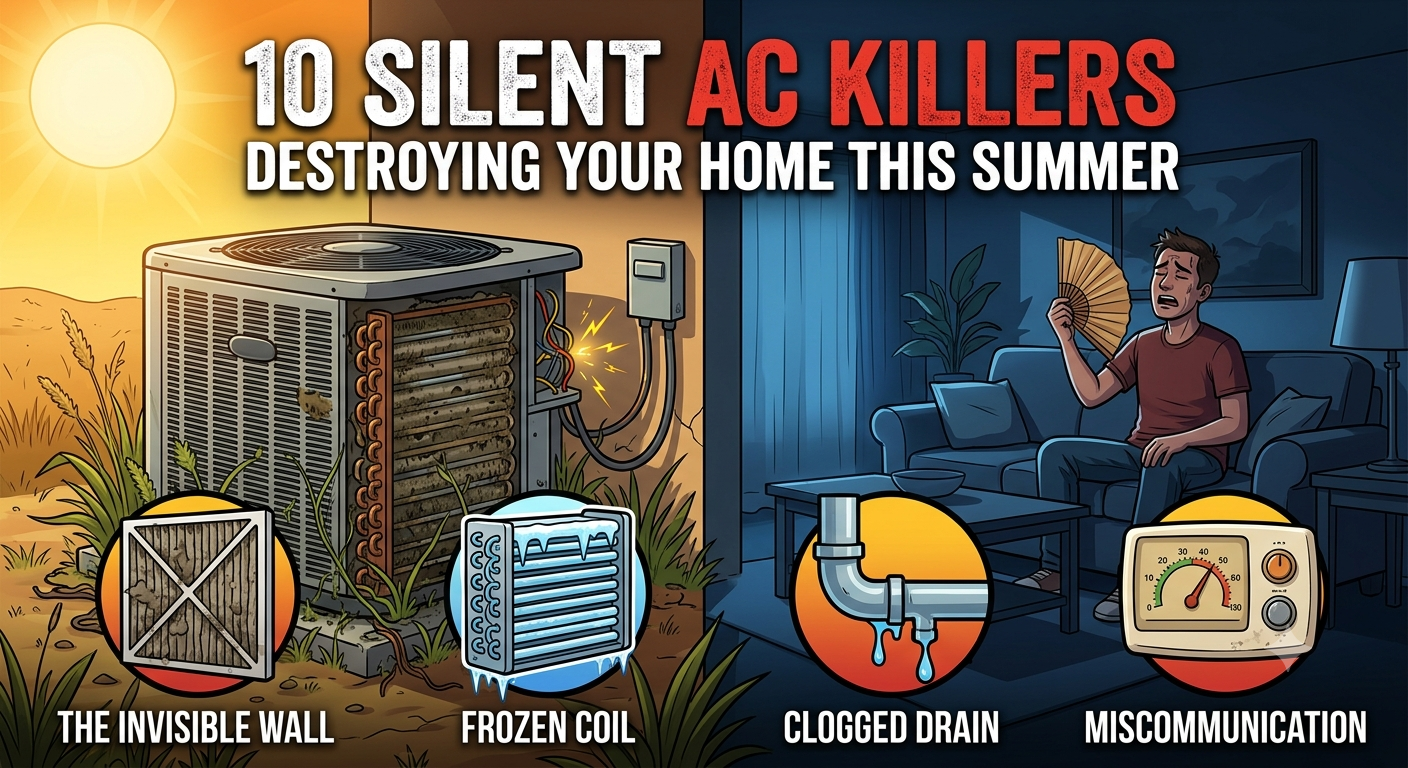
Infographic showing common AC problems like clogged drains, dirty filters, and frozen coils.
By Corey Creekmore July 16, 2026
Is your air conditioner struggling? Discover the 10 silent AC killers ruining your home's cooling system and learn how to easily fix them this summer.
B&B Cool Air technician servicing a commercial walk-in cooler and ice machine in Florida.
By Corey Creekmore July 10, 2026
Protect your business with expert commercial refrigeration repair and maintenance in Lehigh Acres. Trust B&B Cool Air to eliminate downtime. Call today!
Two B and B Cool Air technicians servicing a commercial rooftop HVAC unit in Southwest Florida.
By Corey Creekmore July 3, 2026
Looking for reliable commercial HVAC in Southwest Florida? B&B Cool Air offers expert AC repair, quick installations, and proactive 3-month maintenance.
Show More